Teleport to Topic
A neon sign on top of an arena, an NBA team changing its name for one night, a beer brand urging people to make bad choices. The launch of GTA VI broke out of the screen and became a cultural event. But to understand why so many brands wanted to be part of it, we need to go back twenty-five years, to a time when GTA was, above all, a scandal.
Grand Theft Auto VI came out on 19 November and, for a few days, it really did seem that all roads led to Vice City. Basketball teams, breweries, car makers: everyone had something to say about the latest chapter in the series.
Which raises a question: why did so many brands, many of which have never had anything to do with video games, feel entitled to step into this story? The answer doesn’t lie in the weeks around the launch, but in everything that came before.
A World that looks like ours
If GTA has become a shared reference point, it isn’t just because it has sold so many copies. It’s because it portrays a world in which anyone can recognise themselves.
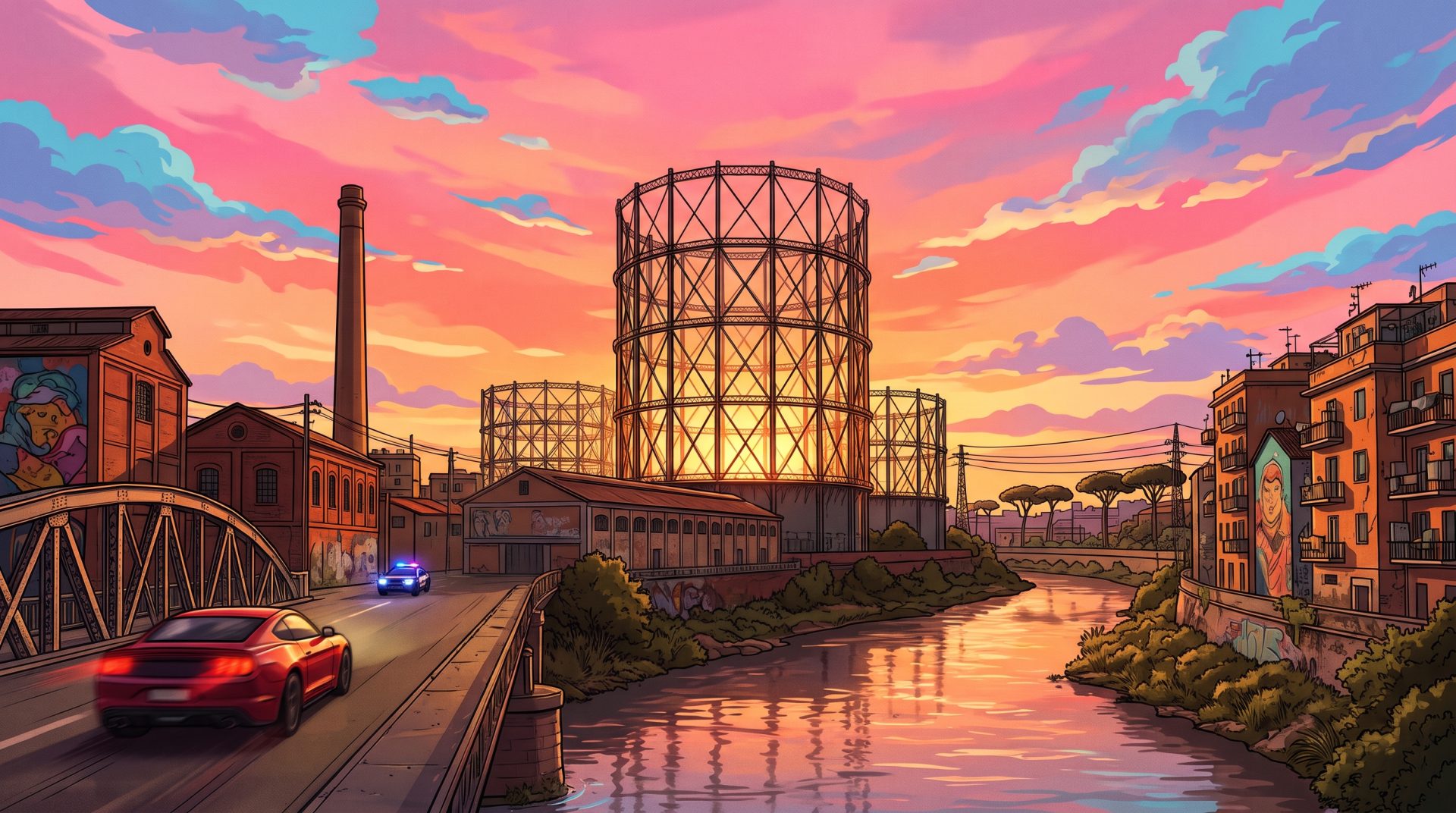
From the very beginning, the series has built warped, satirical versions of America’s great cities: New York became Liberty City, Los Angeles became Los Santos, San Francisco became San Fierro and Miami, of course, became Vice City, the setting of the 2002 instalment that turned the series into one of the most influential of all time.
Inside these cities lives an entire ecosystem of made-up brands. Fast-food chains like Burger Shot and Cluckin’ Bell, beers like Pißwasser, news channels like Weazel News: parodies of real brands so recognisable that they need no explanation. In a way, many brands have been living in Vice City for years, under a false name.
Rockstar knows this well, and has always played with the line between fiction and reality. And that’s exactly the point: GTA isn’t just a video game, it’s a parallel world close enough to ours that we can step into it. So much so that nobody wants to be left out of the conversation.
The art of keeping people waiting
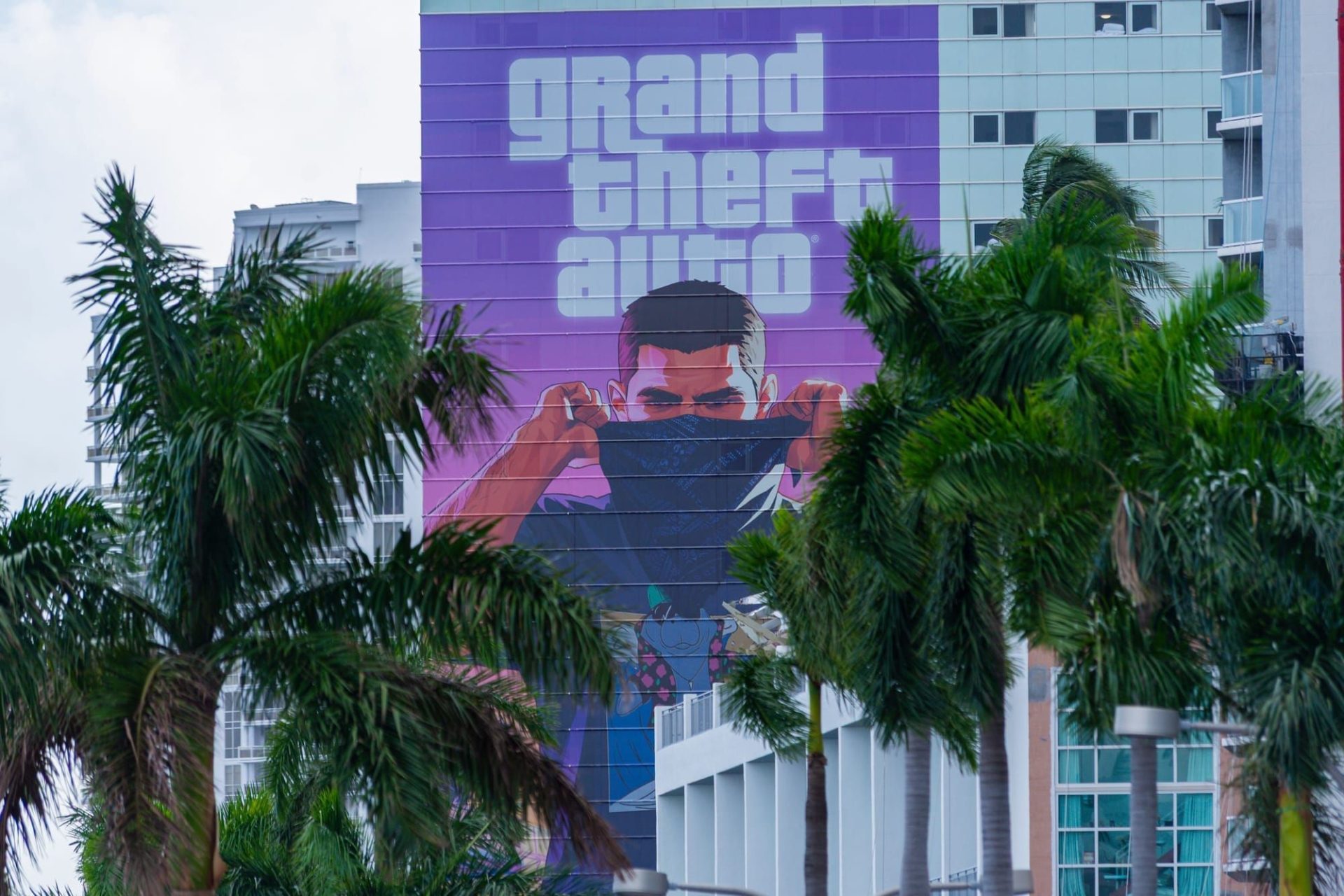
Thirteen years passed between GTA V and GTA VI. At a time when brands feel obliged to post something every day, Rockstar did the exact opposite: it said almost nothing.
Every appearance, precisely because it was so rare, became an event. The first trailer broke every viewing record within hours, and in the long silences between one announcement and the next, the audience did the talking: theories, frame-by-frame analyses, maps pieced together by fans.
And then there were the memes. “We got this before GTA VI” became a universal catchphrase for anything that arrives after an endless wait. By joking about it again and again, the community turned the wait itself into content, and the game into a reference you could quote without ever having played it.
There is, however, one detail that makes this strategy hard to copy. Silence only works if there is a reputation built over time behind it. Rockstar can afford to stay quiet because, for twenty-five years, it has kept its promises. For a brand without that history, the same silence would simply be called oblivion.
When Miami became Vice City
The first to cash in on this legacy was, unsurprisingly, the owner of the house. And it did so in keeping with everything else: sparingly. Rockstar doesn’t sell advertising space inside the game and grants very few official collaborations. That is exactly why, when they do happen, they carry weight.
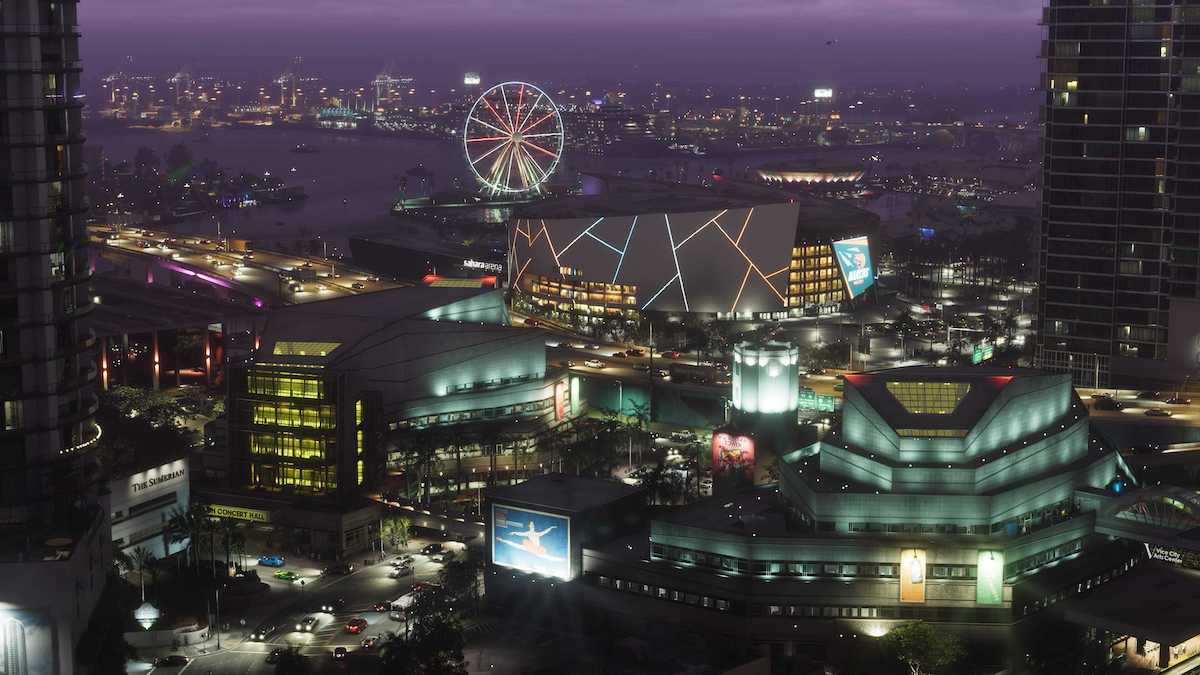
The most ambitious one targeted an entire city. On 1 October, a neon sign reading “Welcome to Vice City” lit up on the roof of the Kaseya Center, home of the Miami Heat. But Rockstar was aiming much higher: it had proposed branding bus stops, manhole covers and even parts of Miami International Airport, to remind anyone landing there that this was the real Vice City. Not everything went to plan.
It’s a telling detail. A city seriously debating whether to become, for a few weeks, the real-life version of a video game is the clearest proof of how far GTA has moved beyond its medium.
The defining moment, though, came on the evening of 18 November. The Miami Heat took on the Milwaukee Bucks with the name Vice City on their jerseys, designed by Nike with Travis Scott’s Cactus Jack, on a court built for the occasion. At the arena’s concession stands, fans could order burgers and fried chicken from Burger Shot and Cluckin’ Bell, the game’s fast-food chains, real at last for one night.
Sport, fashion, music and food, all in the same evening. World-building taken to the extreme: an invented world strong enough to stand on its own outside the screen.
Finding your place in Vice City
Then there are the brands that had no agreement with Rockstar, and therefore couldn’t use the game’s logo or imagery. Many simply repainted their posts in pink and orange. Some, however, did something more interesting: instead of copying GTA, they translated it into their own language.
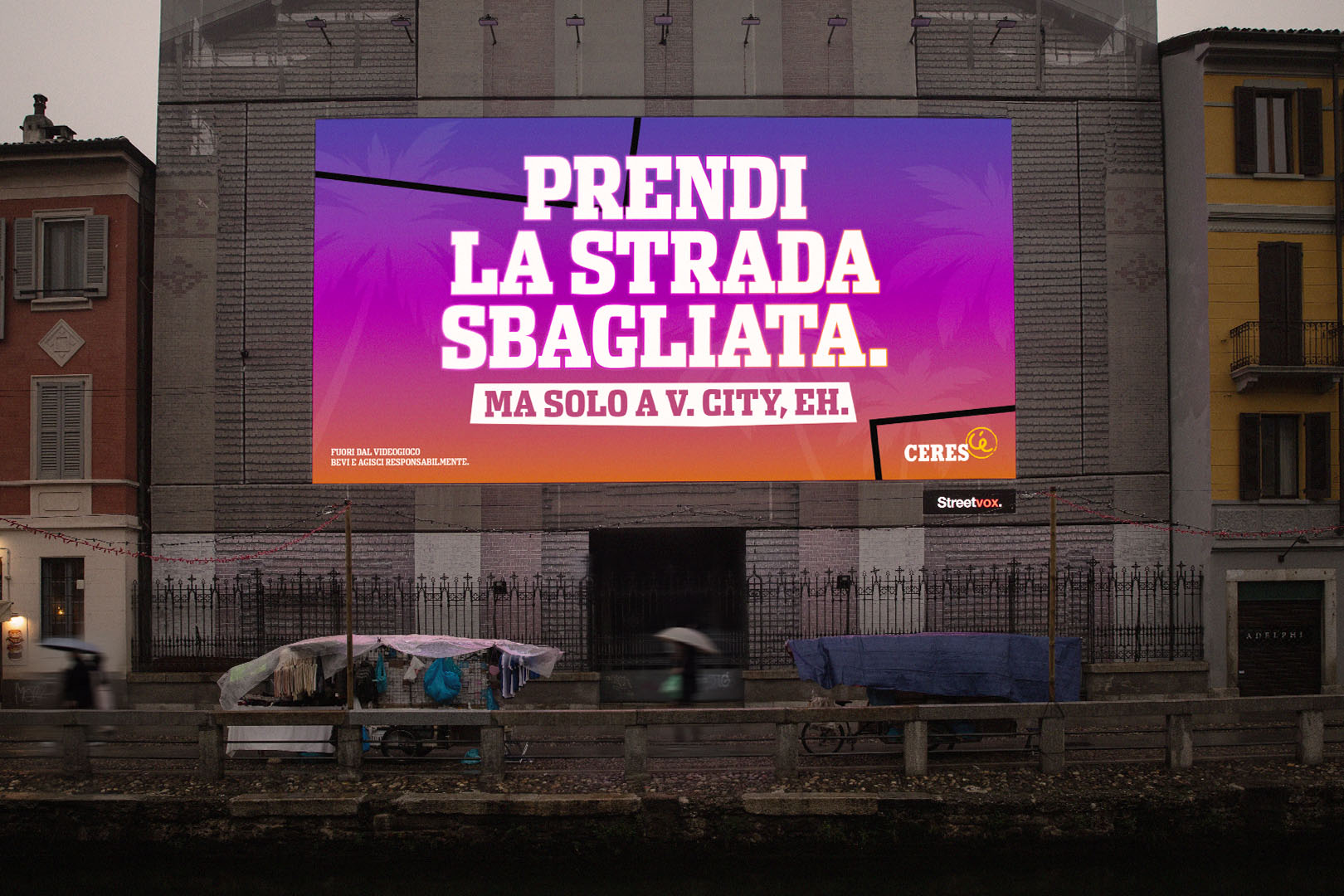
In Italy, the most successful case is Ceres, which took over the walls of Milan with three deliberately bad pieces of advice: “Take the wrong road”, “Make terrible choices”, “Live without limits”. At the bottom of every message, the same disclaimer: “But only in V. City”.
The street as a setting, irreverence, a knack for not taking itself too seriously: these have always been part of the brand’s language, and GTA was the perfect stage to put them on show.
Mercedes-Benz chose a path far removed from the neon aesthetic. On its Instagram profile, it published an illustration hand-drawn by illustrator Andrew Mytro, showing Carl and Bertha Benz in period clothing. The subtext is a small stroke of genius: without them, there would be no cars to steal in Vice City.
Mercedes doesn’t pretend to be part of GTA, nor does it suddenly discover a passion for video games: it brings the conversation back to its own history, the invention of the automobile, and chooses a hand-drawn image just as many others were flooding social media with AI-generated “GTA-style” pictures.
Two brands miles apart in tone and audience, with the same approach: looking for the exact point where their own story meets GTA’s. Neither borrowed GTA’s legacy: each set its own alongside it.
When the neon lights go out
In a few weeks, the sign on the Kaseya Center will go dark, the beach umbrellas of Miami Beach will go back to being anonymous, and our feeds will forget about the fuchsia palm trees. But the point isn’t how long the hype will last.
The launch of GTA VI was the kind of cultural event many brands chase with huge budgets and massive campaigns. Except it wasn’t built in the weeks around the launch: it took twenty-five years. A satire everyone can recognise themselves in, a world full of familiar brands, a wait cultivated through silence, a community that turned it all into a language. It was this story that opened the door to everyone else, and those who walked through it best didn’t try to take it over: they brought their own voice inside.
When the next cultural event comes along, the right question won’t be how to get the brand into it, but where its story meets everyone else’s. The second question is less obvious, and perhaps more important: what kind of story are we building in the meantime, so that one day it’s others who want to step into ours?
Michele Magro
Learn moreYou might also be interested in:

A Guardian investigation reveals how deepfakes are undermining influencers' credibility, with cases of cloned faces used in ads they never authorised. But the most telling case, fashion creator Molly Tranchin's dispute with brand Eby, doesn't involve an outside scammer: it comes down to a contract clause written before "edit" could mean "synthetic regeneration." The piece draws a practical lesson for anyone working with creators: update the contracts before launching the next campaign, not after.
Sponsorship rights can give a brand access to a major sporting event, but they cannot guarantee cultural relevance. Through the examples of Levi’s, Norwegian, British Airways, Ralph Lauren, Rolex and Visa, the article explores why the most effective partnerships are built on distinctive ideas, timing and meaningful participation rather than visibility alone.

As AI reshapes how people search and evaluate brands, community-driven platforms are becoming increasingly strategic. This is why Superhumans developed "Reddit: The Missing Opportunity" a proprietary deep dive exploring how communities evolving into new layers of discoverability, relevance and trust.