Teleport to Topic

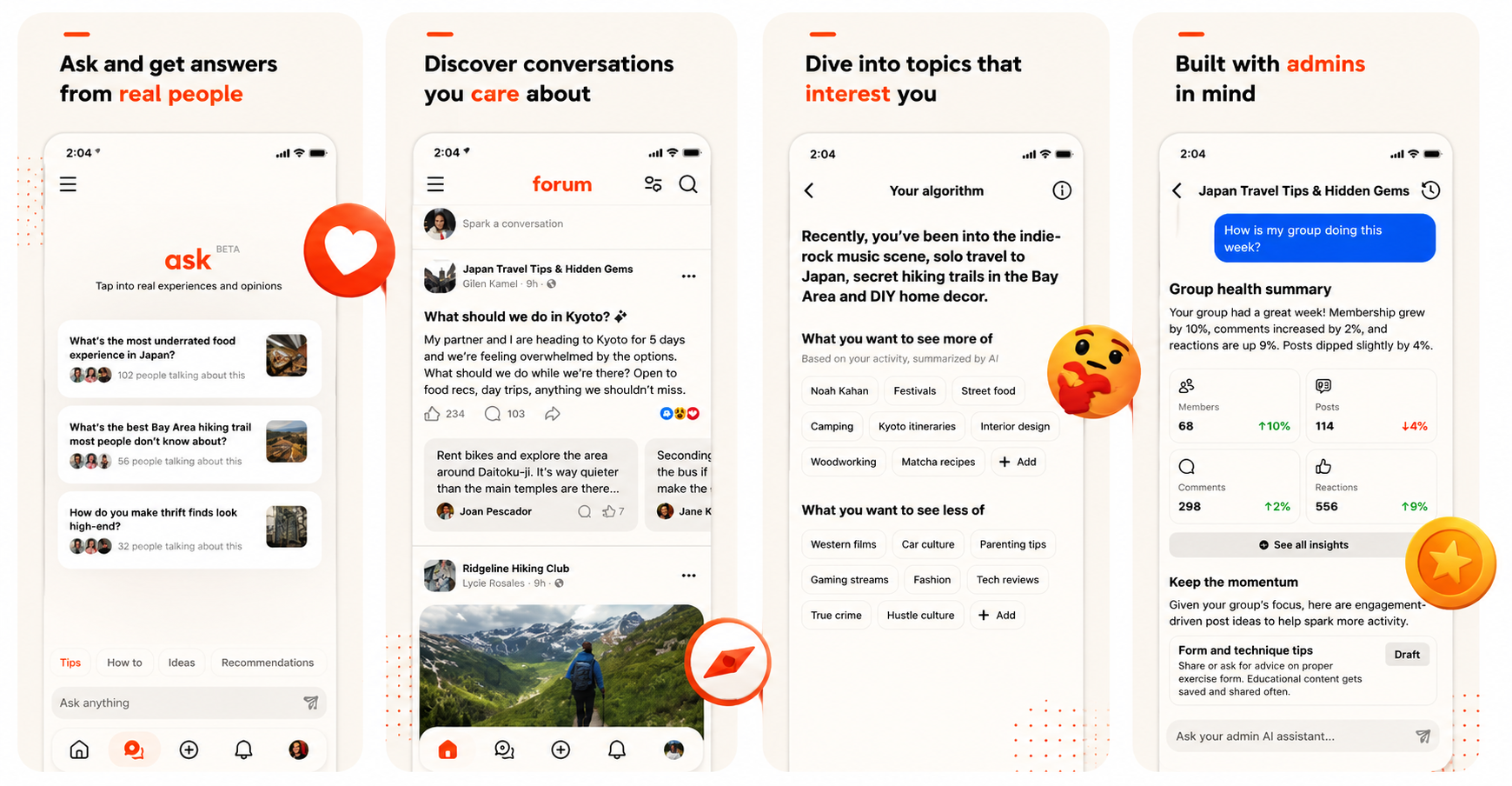
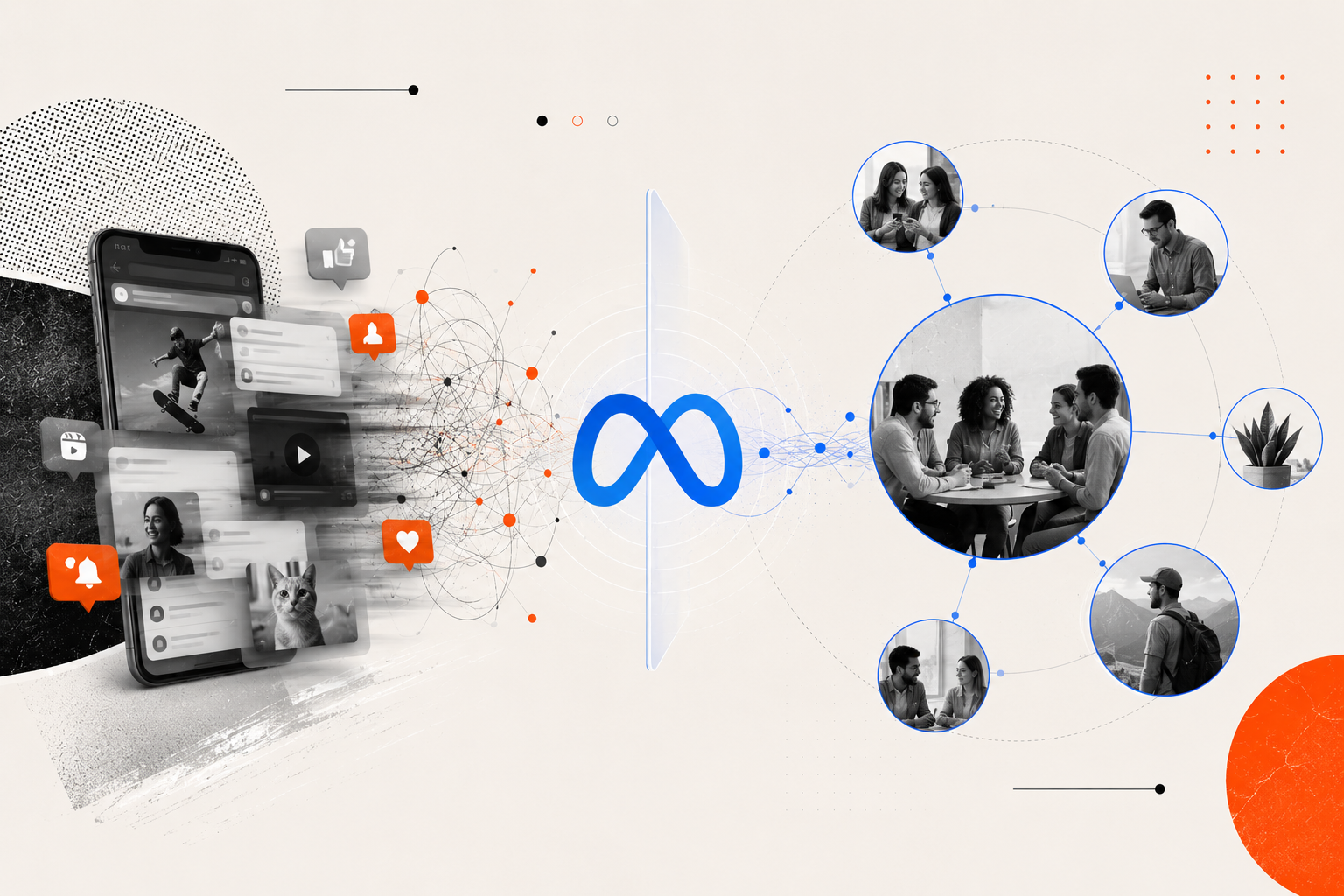
Meta has launched Forum, a new app dedicated to Facebook Groups. At first glance, it looks like a functional move: separating Groups from the main feed and turning them into a more autonomous, more organized space built around discussions, questions and vertical communities.
Forum isolates the Groups experience from everything else: no general feed, no continuous stream of friends, creators, pages, videos and recommended content. Inside Forum, the focus is on conversations, threads, advice, answers and specific interests.
Visualizza questo post su Instagram
A new interface for Facebook Groups
When you access Forum with your Facebook account, the app automatically imports the groups you are already part of and builds a feed based only on those conversations. Technically, Forum is not a separate ecosystem, because everything you post inside the app continues to appear in Facebook Groups as well. The community stays the same, but the way you move through it changes.
For years, Groups have been one of the liveliest areas of Facebook. They are full of practical questions, advice, informal reviews, opinions and niche solutions. This is material that often remains invisible in the main feed, but is extremely valuable for people looking for precise, specific information. Forum tries to make this mass of information easier to navigate for users, but also for artificial intelligence.
The value of human answers
The promise behind Forum is to help people find real answers from real people. Especially in recent years, people have increasingly looked for content created by other people. They do it when they add “Reddit” to a Google search. They do it when they read years-old threads before buying a product. They do it when they trust an imperfect but lived-in answer more than a perfect but generic piece of content.
We look for authenticity, and this is the answer Meta is trying to offer.
Ask turns Groups into a conversational search engine
The most interesting feature in Forum is called Ask. It allows users to ask questions and receive AI-aggregated answers based on discussions already taking place inside Groups. Instead of manually searching through every community, users can ask something directly and receive a summary.
This shifts the experience from an alternative feed to a conversational search engine. A Facebook Group is no longer just a space where people interact in the present. It becomes a living archive of experiences, opinions, advice and language. A social database built over time by users, validated by community dynamics and made searchable through AI.

The inevitable comparison with Reddit
In recent years, Reddit has become much more than a consumer platform. It is now one of the most interesting platforms for online search and artificial intelligence. Its conversations are valuable because they are human, contextual and socially validated.
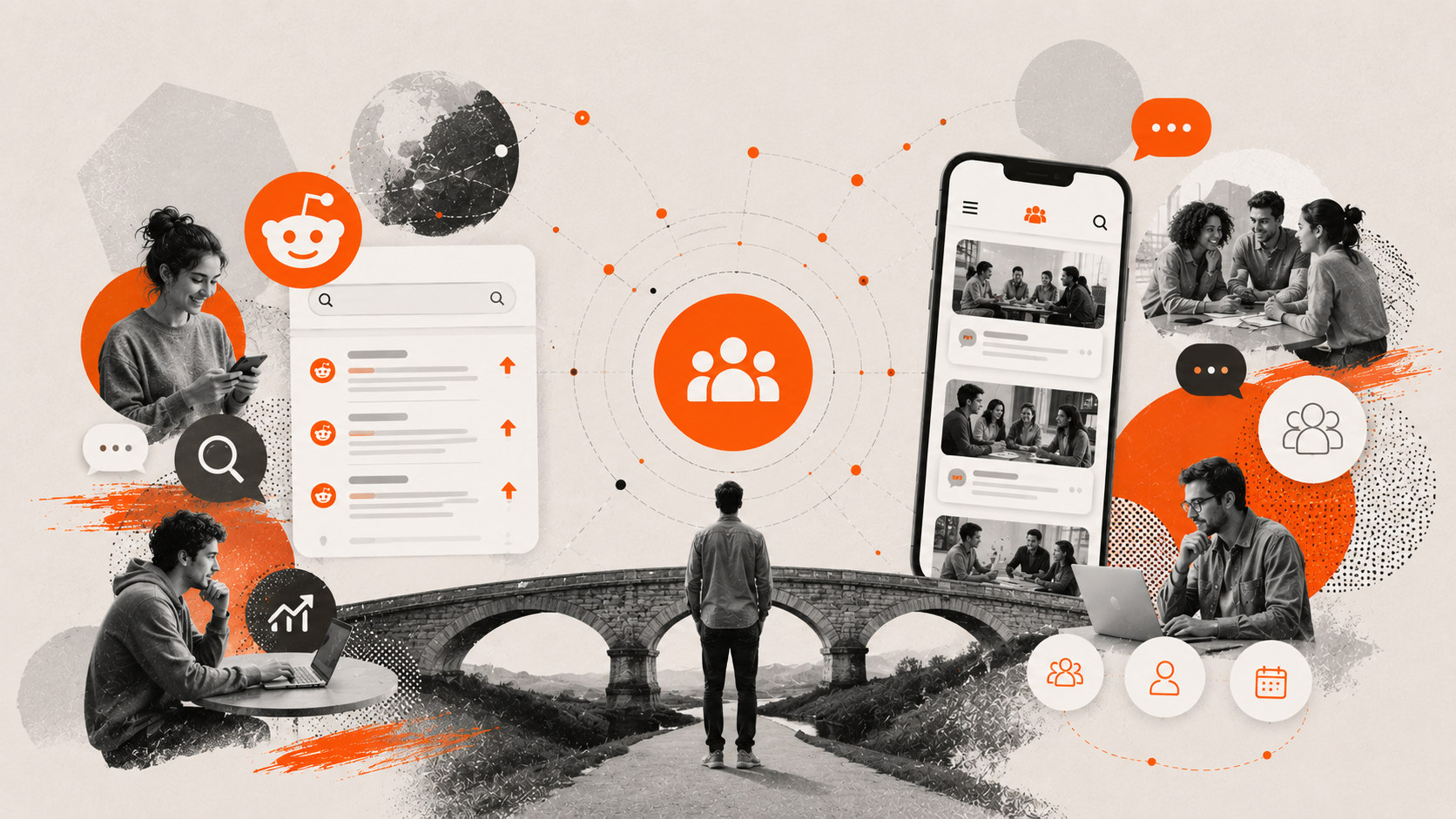
Forum seems to be moving in the same direction, but with one important difference: Meta is not starting from scratch. It already has Groups, identities, relationships and years of conversations. More than a Reddit clone, Forum looks like an attempt to make Facebook Groups compatible with the new way information is searched, synthesized and distributed.
The new visibility is built through conversations
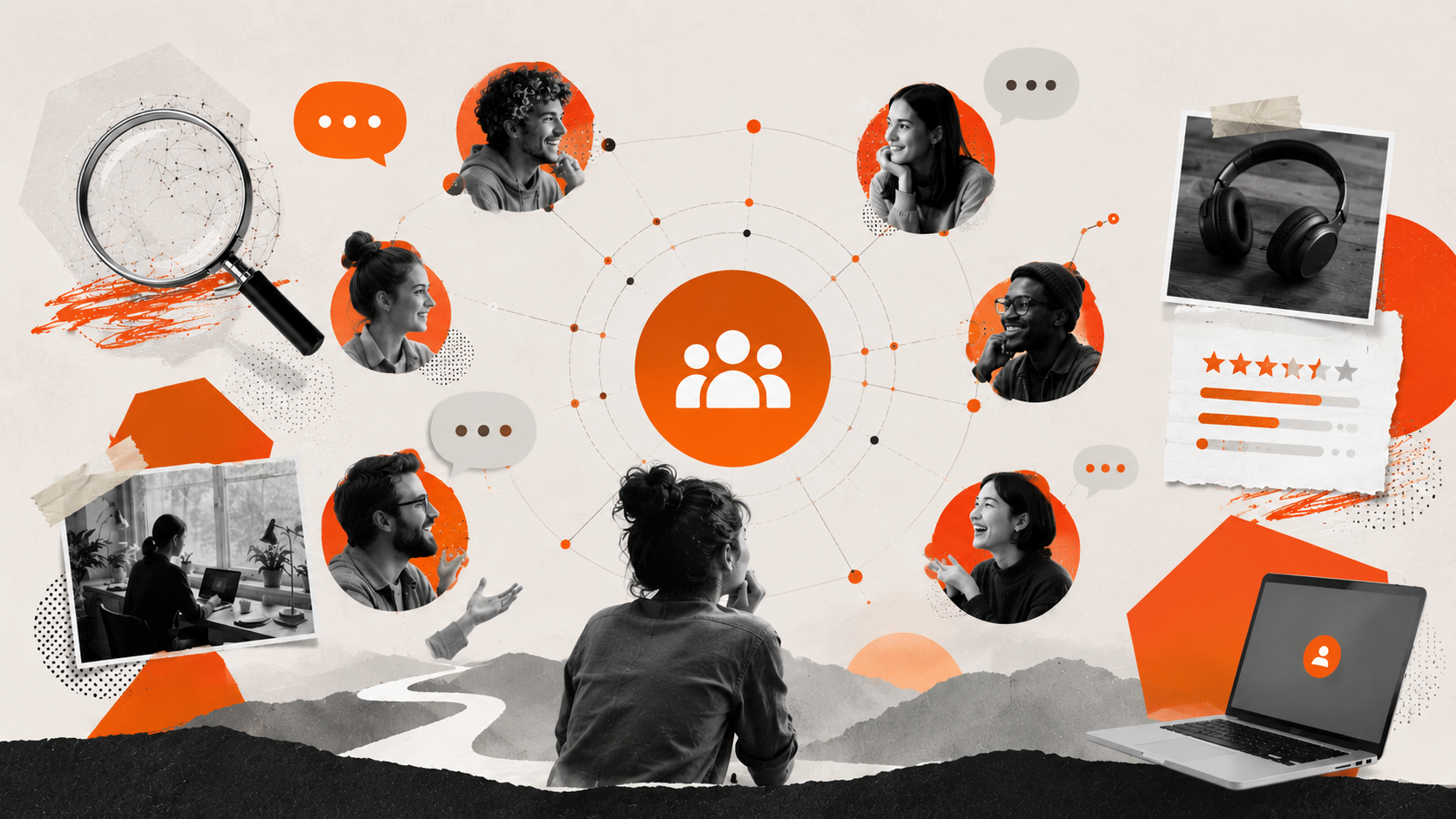
For brands, this is the most important part. Visibility no longer depends only on what a brand publishes on its own channels. It increasingly depends on what people say, ask and validate inside conversational spaces. Search, social and AI are converging. Content no longer only needs to work in the feed or rank on Google. It also needs to be readable, interpretable and reusable by AI systems that build synthetic answers for users.
In this scenario, communities become a new layer of discoverability. They produce signals that official channels often struggle to generate: direct experience, natural language, real problems and horizontal trust. The question for brands is no longer only: “What do we publish?” It is also: “Which conversations do we exist in?”
The point is not Forum
Meta is trying to give a new shape to one of the platform’s most underestimated assets: conversations between people.
In an internet that is increasingly synthetic, automated and mediated by AI, human content becomes central again. It comes from real contexts, concrete problems and shared experiences.
At Superhumans, we look at these shifts as part of a broader transformation in the way brands, platforms and communities create meaning online. As a creative agency, we help brands understand how culture, technology and human behavior are changing the rules of visibility.
Riccardo Setth
Learn moreI’m Riccardo Setth, a Digital Project Manager with over 10 years of experience in communication. I work across social, digital content and integrated projects, helping ideas move from brief to execution with clarity, consistency and purpose. My role is to connect people, needs and outputs, making sure every project keeps its direction without losing its creative energy.
You might also be interested in:
From creative thinking to intelligent systems, Superhumans is entering a new phase with POWA, the new AI Intelligence Company designed to embed artificial intelligence into the strategic, operational and organisational processes of brands and businesses.
In an increasingly crowded media ecosystem, a good story needs much more than a press release: it requires vision, precision and a creative platform capable of making it relevant.

An analysis of 9.5 million citations shows that LinkedIn is becoming one of the most influential sources in AI-generated answers. For brands, content strategy has officially entered the age of AI Search.
As AI reshapes how people search and evaluate brands, community-driven platforms are becoming increasingly strategic. This is why Superhumans developed "Reddit: The Missing Opportunity" a proprietary deep dive exploring how communities evolving into new layers of discoverability, relevance and trust.