PR and Media Relations today: is creativity really the key to capturing attention?

by

5 min for reading

PR and Media Relations today: is creativity really the key to capturing attention?

Media Relations have never been as creative as they are today. This is an inevitable evolution, shaped by a context in which media attention has become an increasingly rare and difficult resource to earn. In this scenario, simply having something to say is no longer enough: what is needed is ingenuity, vision and an extremely precise reading of current affairs and their dynamics.

It is a job that requires sensitivity and intuition, almost close to art in its interpretive dimension, while remaining deeply anchored in reality: at its core, there must always be a concrete piece of news, relevant content and a precise understanding of the stakeholders involved.

Media attention has become an increasingly rare resource

The traditional perimeter of Media Relations, made up of well-written press releases, consolidated relationships, follow-ups and cross-channel pushes, has long been showing its limits. Newsrooms work under constant pressure, often with reduced teams and within a continuous flow of news that never pauses.

At the same time, a significant portion of online media is increasingly driven by the pursuit of clicks, buzz and viral moments, further reducing the space available for institutional or complex content.

The spaces dedicated to corporate and institutional news have progressively shrunk, and those that remain are contested by thousands of companies, organizations and public stakeholders. In this extremely competitive context, even a timely, accurate and content-rich press release can easily get lost in the background noise, without managing to stand out or generate real interest.

Why a press release is no longer enough today

Today, a story needs to be built, enhanced and placed within a context that allows it to gain depth and relevance. This means thinking of the message not simply as a text, but as an experience to be designed from the very beginning.

It requires asking where it will be announced, what form it will take, what visual identity will accompany it and through which media and narrative sequences it will reach its audience.

An event, for example, can hardly be limited to a traditional press conference. It can become a real stage, a ritual or a symbolic moment, where the format itself communicates something about the subject presenting and the object being presented.

In the same way, a video can offer television journalists and digital media a ready-made, recognizable and hard-to-replicate story, while social content must be designed as autonomous extensions, built around the specific attention and consumption dynamics of each platform.

Contemporary Media Relations therefore require concrete, applied and conscious creativity, capable of transforming a single announcement into a structured and coherent communication platform.

Creating a story means designing an experience

The central point is not to make something artificially interesting when it is not, but to identify the most effective form to make the real value of the news visible.

Place, timing, gesture, image, video and digital content thus become parts of one integrated system, in which each element supports the others and contributes to building a coherent and memorable perception.

This approach requires always starting from the content, while also moving beyond the centrality of text. Even before writing a press release, it is essential to understand what kind of experience can make that story truly memorable, which tools can increase its editorial potential and which materials can concretely facilitate the work of newsrooms.

In this sense, creativity enters the Media Relations process as a strategic lever, capable of translating technical, institutional or complex content into an accessible, recognizable and relevant narrative.

The Italgas Nimbus project: turning a smart meter into an international story

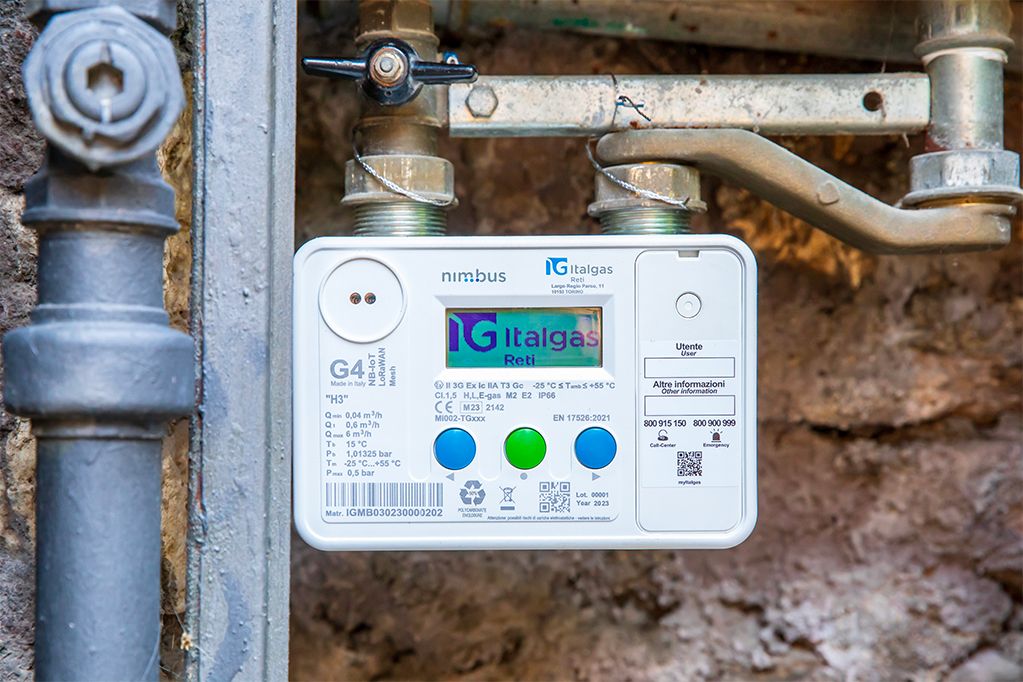
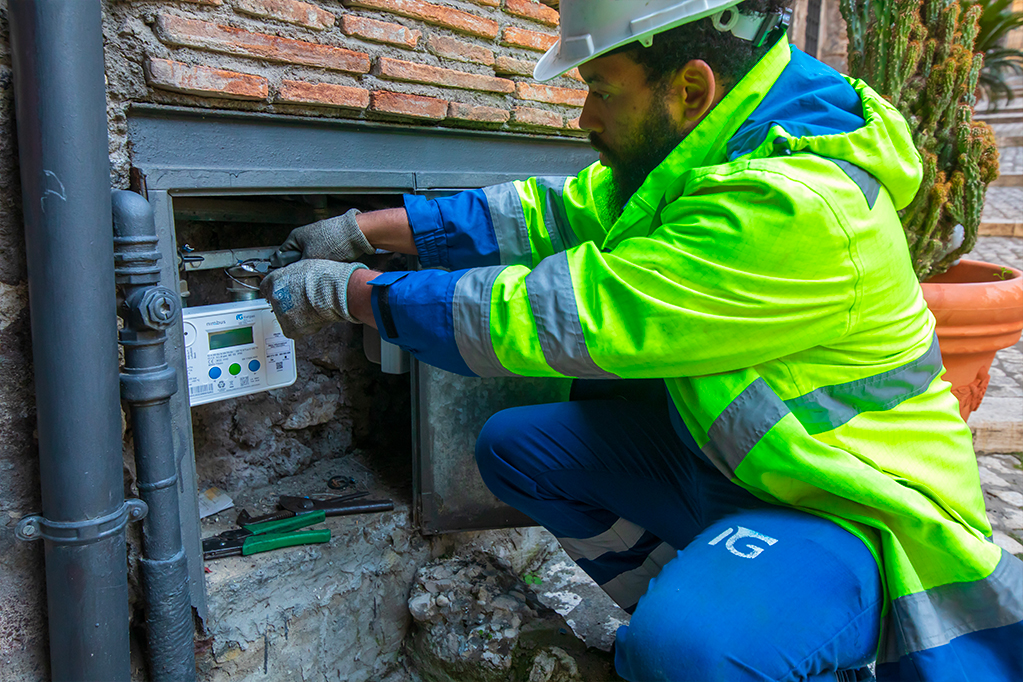
When we worked with Italgas on the presentation of Nimbus, the smart meter developed entirely in-house for the first time in the company’s history, the challenge was anything but simple.

Nimbus is a unique product worldwide for its ability to process and measure different gas blends and hydrogen percentages above 20%, and it was designed to make the energy transition possible in its most concrete and operational dimension.

However, from a perception point of view, it was still a gas meter: a device that, in its most modern versions, people are no longer even used to reading, because it now operates fully autonomously.

The response was to build a true communication case around the object, giving it the narrative and visual stature it deserved. The presentation was organized in Paris, during Enlit, the leading international trade fair dedicated to the utilities sector, choosing a setting capable of immediately signaling the global value of the innovation.

The design of Nimbus remained hidden until the moment of the presentation and was unveiled through a veil, using a gesture closer to the language of art and design than to that of traditional industry fairs.

Around fifteen journalists travelled from Italy to attend the event, while other media outlets were engaged directly from France, further expanding the international reach of the initiative.

The platform was completed by a video that told the story of Nimbus through the visual grammar of a fine watch or a technological jewel, with direction, rhythm and aesthetics typically associated with luxury objects.

This choice was not intended to turn a meter into something it was not, but to immediately communicate the level of care, ambition and ingenuity contained in the product.

The result was a story capable of standing out from the background noise, attracting the attention of national and international media and positioning Italgas as a cutting-edge player in the energy transition.

A positioning built on concrete innovation and strengthened by a coherent and distinctive narrative system.

The new skills of creative Media Relations

Practicing cutting-edge Media Relations requires, first and foremost, the ability to read the moment and the context, deeply understanding the logics, formats and value hierarchies of the media one works with.

It also requires a vision of the message that goes beyond the purely textual dimension and considers from the outset the form that content will need to take in order to be understood, told and shared effectively.

Alongside this sensitivity comes the ability to orchestrate different elements, such as a place, a gesture, an event, a video and a sequence of digital content, so that they work together and amplify one another.

It is an activity that cannot be carried out automatically or according to a standard formula, because every story, every stakeholder and every context require a specific, tailor-made solution.

When approached with seriousness and vision, Media Relations therefore remain a craft of continuous invention: bespoke in design and rigorous in execution.

Precision and flair must coexist within the same process, because entrusting the entire weight of a story to a simple press release means continuing to work according to rules that the media system has long since moved beyond.

Mirko Cafaro

Learn more

At Italgas, I serve as Head of Media Relations, Social Media & Water Communication, managing corporate communications for Europe’s leading gas distribution group and its subsidiaries across Italy and Greece. After 20+ years in media – across journalism, press offices and institutional communications – I’ve learned one thing: reputation is built in the details, over time, and by keeping a cool head when pressure rises. PR is a marathon. Not a sprint.

You might also be interested in:

An analysis of 9.5 million citations shows that LinkedIn is becoming one of the most influential sources in AI-generated answers. For brands, content strategy has officially entered the age of AI Search.

What is Meta’s Forum, the new app for Facebook Groups built around real conversations and taking on Reddit in the age of AI?

As AI reshapes how people search and evaluate brands, community-driven platforms are becoming increasingly strategic. This is why Superhumans developed "Reddit: The Missing Opportunity" a proprietary deep dive exploring how communities evolving into new layers of discoverability, relevance and trust.

There’s a fundamental difference between showing up in a feed and being part of a conversation. The first interrupts; the second participates. That difference defines how brands connect with people today.