AI is reading LinkedIn. Is your brand giving it anything worth citing?

by

6 min for reading

When people look for an answer today, they are increasingly less likely to open ten different links and compare them. They ask ChatGPT, Gemini, Claude, Copilot or Google AI, and receive a single, fully formed response. In that process, AI systems select the sources, decide which contributions appear trustworthy and determine which brands, products and experts make it into the final answer.

Digital visibility is therefore moving from a ranking model to a citation model.

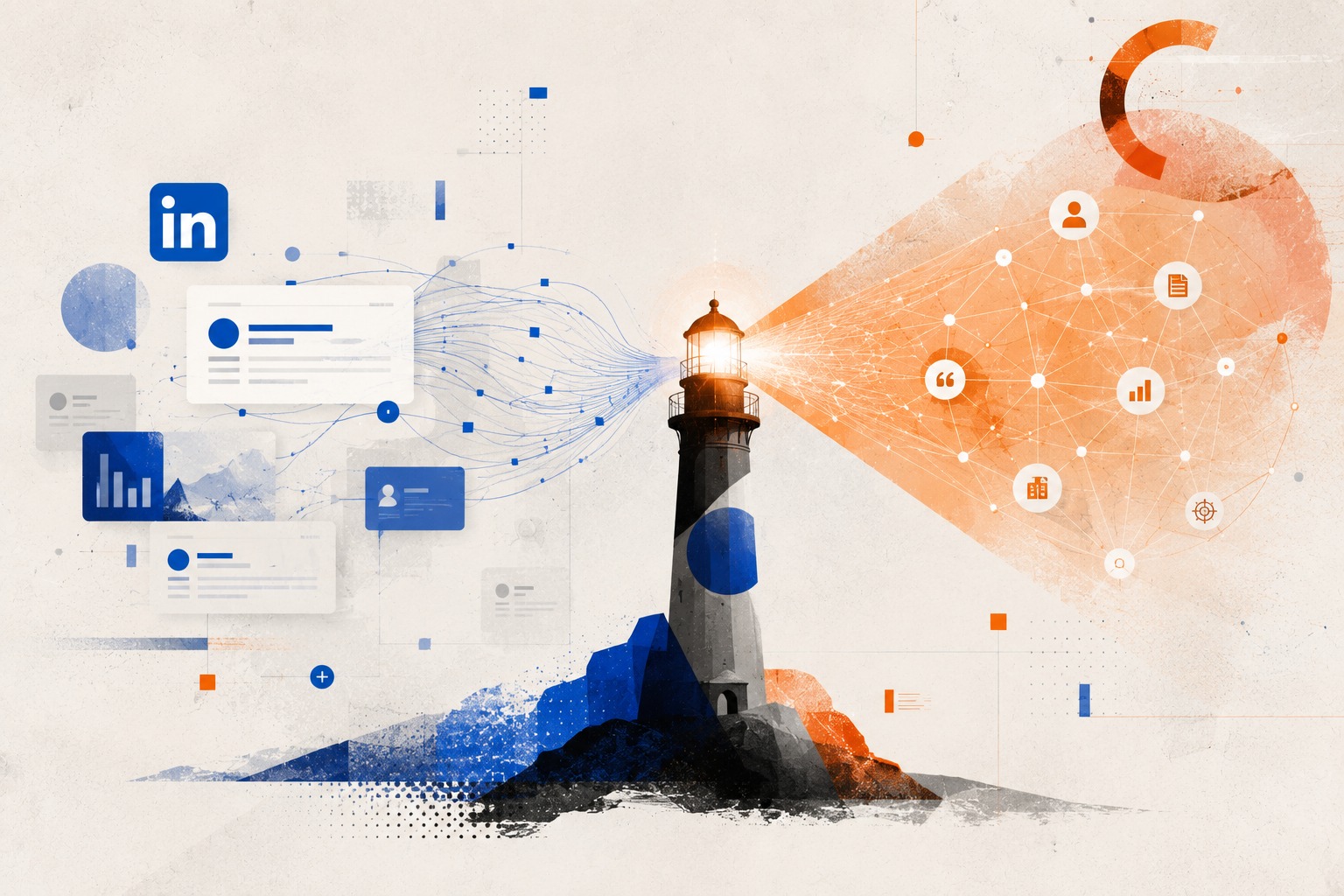
Appearing in search results still matters, but the new challenge for brands is becoming part of the information AI uses to build its response. The report How LinkedIn Content Wins in AI Search, produced by Meltwater in partnership with LinkedIn, captures this shift through an analysis of 9.5 million citations across six major AI systems and 16 B2B categories. Its findings make one thing clear: LinkedIn is no longer just a professional social platform. It is becoming part of the knowledge layer AI uses to understand the business world.

LinkedIn is becoming a source for AI Search

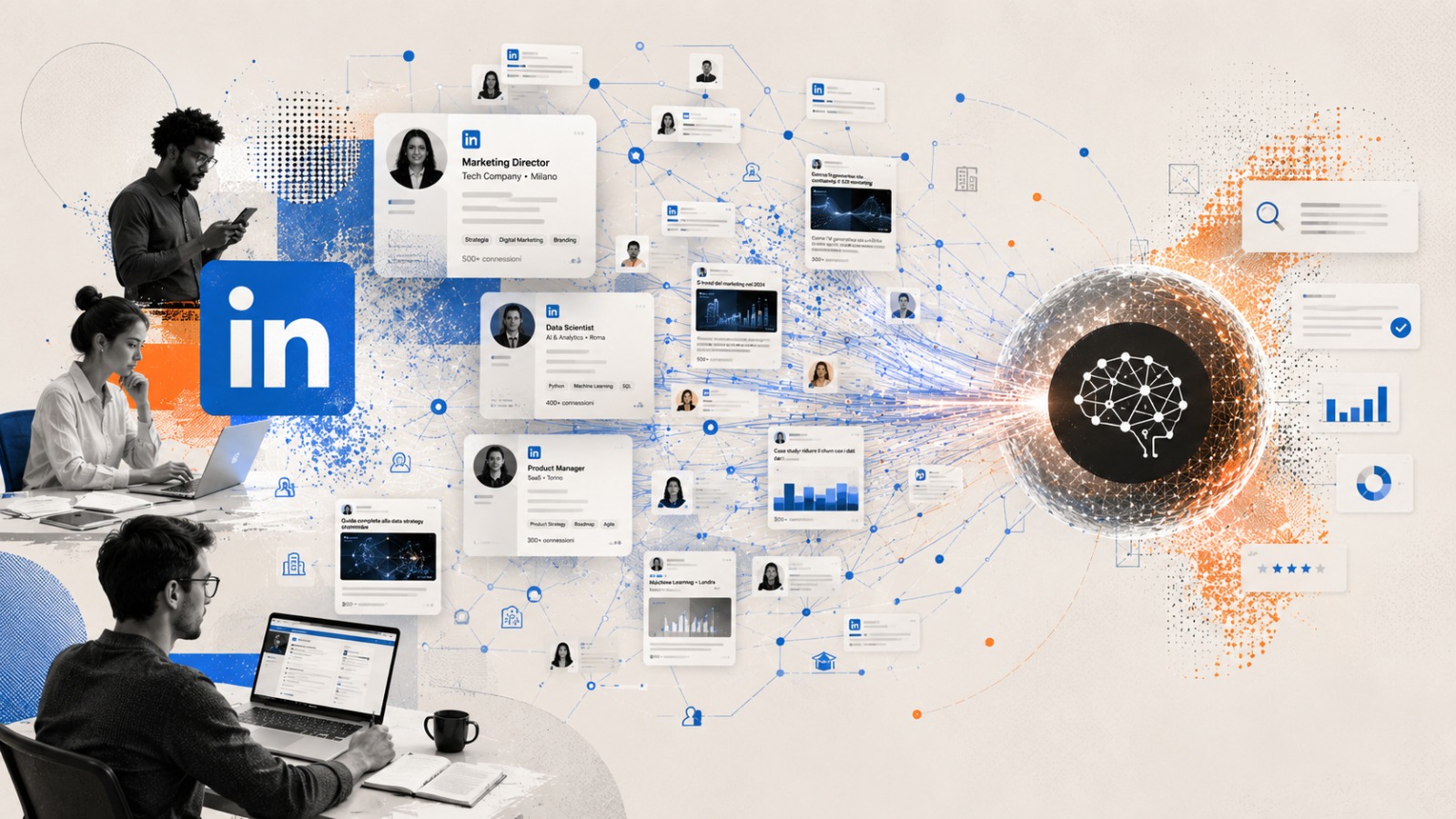
Within the scope of the study, LinkedIn ranks as the second most cited source in B2B AI queries and appears among the top five domains in 14 of the 16 categories analysed. It takes the number one position in AI and Data Science, as well as Marketing and Advertising. Over the four-week research period, its citation share increased by 26%, moving from 0.76% to 0.96%.

These numbers should be read within the methodology of the report, which is based on a defined set of prompts, models and professional categories rather than as a universal ranking for every possible search. The direction, however, is unmistakable. When users ask professional questions, compare vendors, evaluate tools or look for practical guidance, AI systems are turning to LinkedIn with increasing frequency.

The platform offers something generative models find particularly valuable: expertise attached to real people, connected to a job title, a company and an industry. Every contribution exists within a professional context that helps establish authority and makes it easier to trace a statement back to its source. LinkedIn is effectively becoming a distributed archive of professional knowledge, accessed by people through the feed and by AI through search and answer-generation systems.

In AI visibility, people outperform company pages

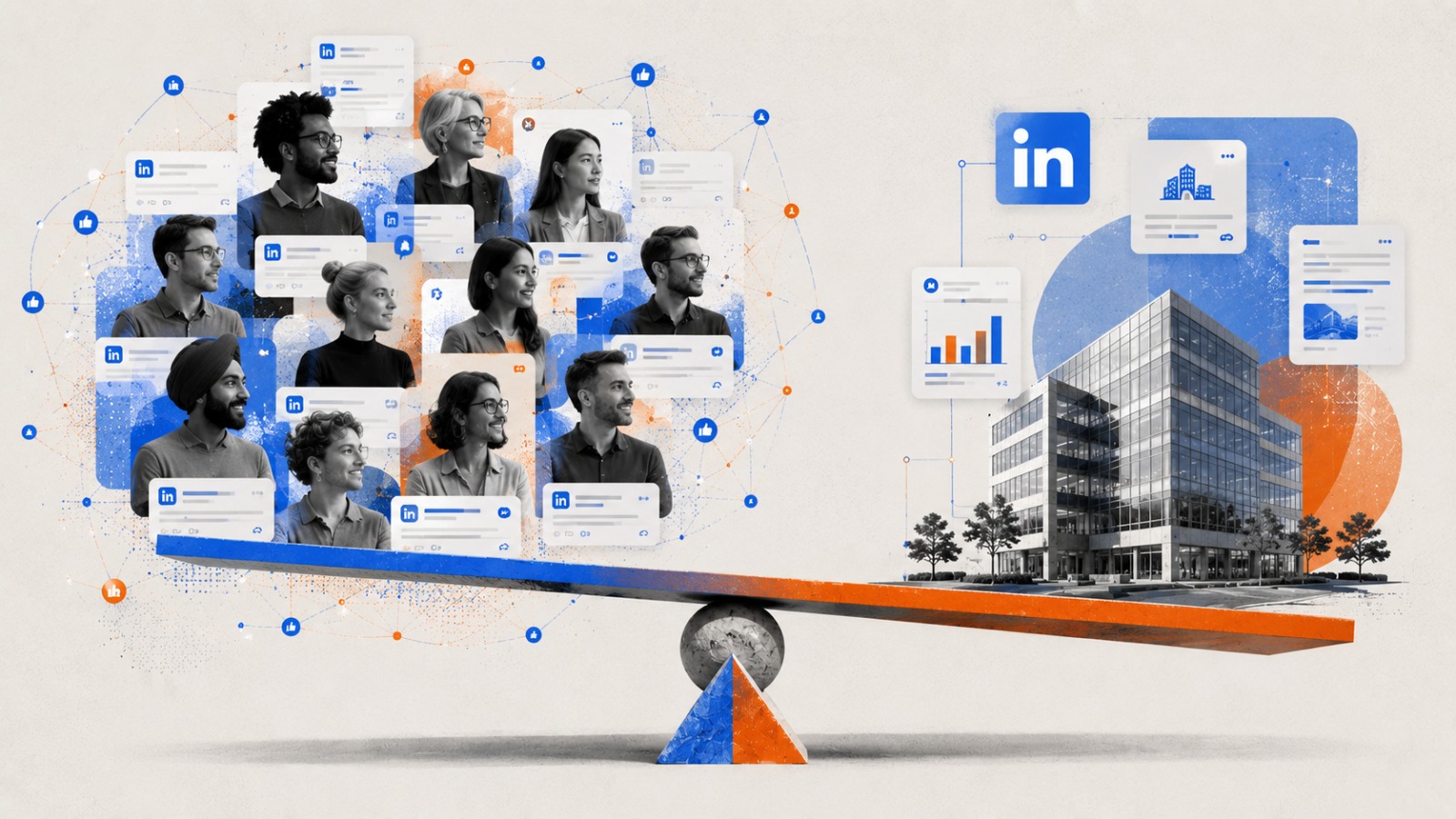
The most relevant finding for brands concerns where those citations come from. Seventy-five per cent of LinkedIn content cited by AI originates from individual profiles, while Company Pages account for the remaining 25%. Individual voices lead across every system analysed, including Copilot and GPT-5, which show a stronger preference for corporate content than the other models.

The report also suggests that audience size matters less than many marketers assume. More than half of all citations come from profiles with fewer than 10,000 followers, while text-based posts account for 72% of cited content. Visibility inside AI-generated answers appears to depend less on influence at scale and more on subject-matter expertise, relevance to the question and the ability to make knowledge clear and usable.

For companies, this changes the role of employee advocacy and thought leadership. Asking employees to reshare a Company Page post creates amplification. Helping managers, specialists and practitioners turn their expertise into original content creates a distributed knowledge asset, one that can strengthen the reputation of the brand far beyond the feed.

The LinkedIn analysis published alongside the report reinforces the same point: AI systems assign greater weight to expert voices when role, experience and content align. For brands, the editorial presence of their people is becoming part of AI visibility strategy, alongside its role in personal reputation and corporate authority.

The content AI cites is useful, structured and surprisingly practical

The contents cited by AI are useful, structured and concrete

92%
of the contents has a hierarchical structure
75%
of the contents mentions the companies
67%
of the contents includes statistics

A significant part of the report focuses on the most frequently cited LinkedIn content, and the pattern is far removed from generic thought leadership, inspirational posting or polished corporate opinion. The content that appears most often in AI answers helps people solve a problem, compare options or make a decision.

The most effective length sits between 1,500 and 2,500 words, with a median of 1,725, and long-form articles generate 6.5 times more AI citations than standard posts.

Ranked lists, vendor comparisons, buying guides, checklists and technical explainers perform well because they mirror the way people ask questions to AI. When someone wants to know which solution to choose, what criteria to consider or how to approach a problem, the model looks for content from which it can extract a precise answer. Citability grows when a text contains verifiable claims, recognisable entities and sections that are easy to interpret.

That does not mean writing for machines at the expense of people. Clarity, specificity and usefulness improve content for both. The risk begins when optimisation becomes another factory for interchangeable listicles created only to capture queries. AI may recognise the structure, but reputational value still comes from real experience, credible data and a distinctive point of view.


From LinkedIn strategy to AI visibility strategy

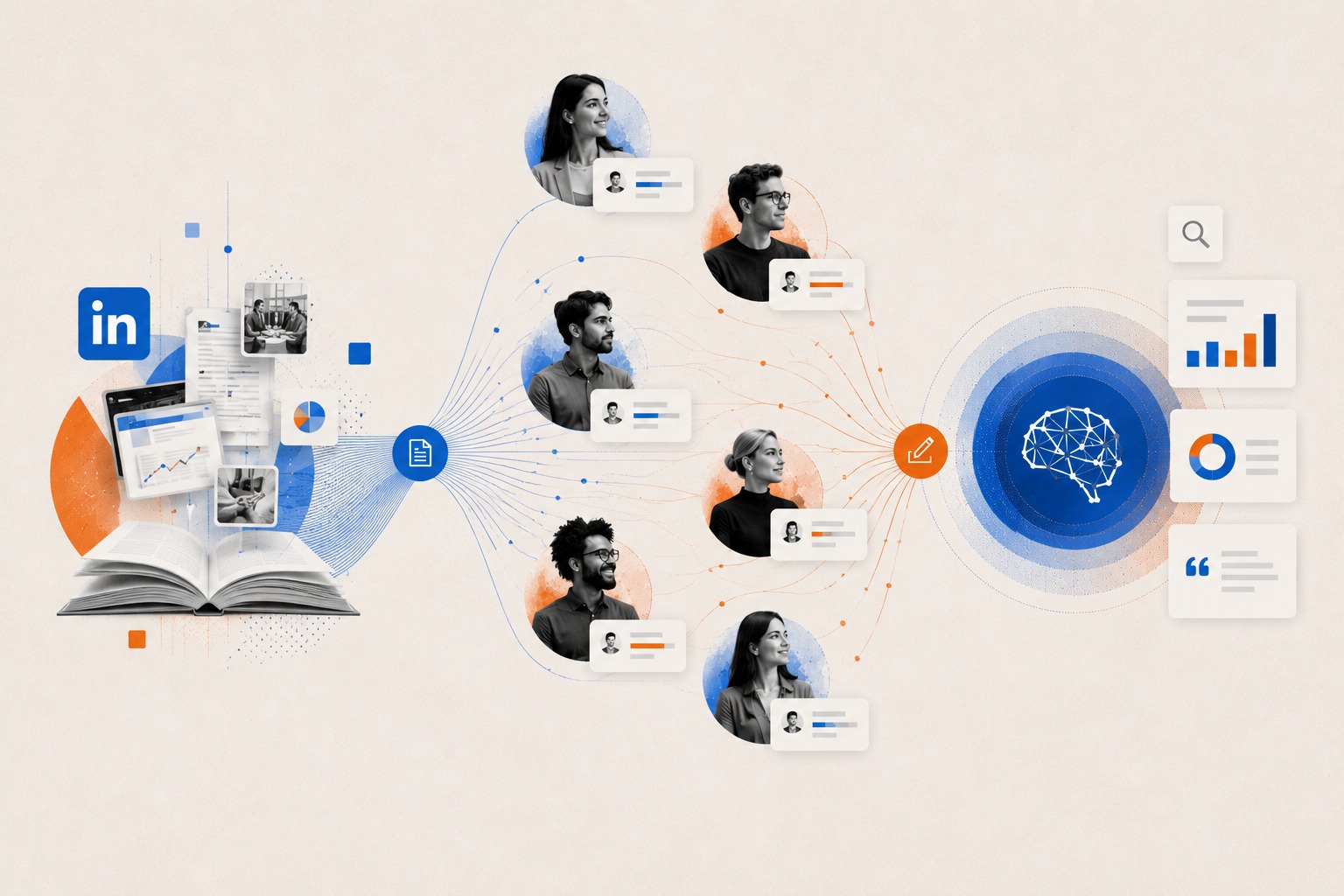
From our perspective, the report suggests that LinkedIn should be managed as a broader editorial system rather than as a simple split between a Company Page and a handful of personal profiles. The brand defines the strategic territories, provides data, research and real case studies, while its people interpret those materials through their own expertise and responsibilities. The Company Page remains the institutional source, working alongside a network of recognisable experts, each able to own a specific part of the conversation.

This requires proper governance. Brands need to identify three to five professional territories that matter to the business, map the people with genuine experience in those areas and build editorial briefs around the questions the market is actually asking. Content should include attributed data, company and tool names, concrete examples, comparisons and practical guidance, published with enough consistency to keep pace with fast-moving topics. According to the report, 72% of cited content is original and 48% was published within the previous three months, which makes continuity and freshness impossible to ignore.

Measurement needs to evolve as well. Impressions, reactions and follower growth still describe performance inside LinkedIn, but they say very little about how visible a brand is inside AI-generated answers. Marketers now need to monitor which sources are being cited, how the brand is described, which people emerge as experts and which topics remain uncovered. SEO, AEO and GEO are beginning to converge with social strategy, corporate communication, content marketing and digital PR.

The Superhumans takeaway: stop publishing for the feed and start building sources

For years, LinkedIn content followed a familiar logic: publish, distribute, engage. Today, that same content may be discovered months later, removed from its original context and used by an AI model to shape a recommendation. Its potential audience now includes systems that read, classify and reorganise the knowledge available online.

For brands, the implication is clear. A strong LinkedIn strategy must create material worth using. That means credible people, original thinking, readable structure and a clear connection between expertise, evidence and practical value. Creativity still plays a critical role, especially in making complex topics accessible and giving the brand a recognisable point of view, but it has to work with substance.

The new editorial question is no longer only how many people will see a post. It is whether that content can become one of the sources through which the market understands a topic, evaluates a solution or discovers a brand.

LinkedIn is still a place where professional conversations happen, but it is also becoming one of the places where AI goes looking for answers. Being present matters. Being useful enough to be cited will matter much more.

Andrea Galtieri

Learn more

At Superhumans, I work as Head of Digital & Social, helping brands turn digital into something that actually moves the needle. After 17+ years in digital, across strategy, creative direction and social ecosystems, I’ve learned one thing: digital only works when it’s tightly connected to business goals, culture and people. Not slides. Not buzzwords.

You might also be interested in:

What is Meta’s Forum, the new app for Facebook Groups built around real conversations and taking on Reddit in the age of AI?

As AI reshapes how people search and evaluate brands, community-driven platforms are becoming increasingly strategic. This is why Superhumans developed "Reddit: The Missing Opportunity" a proprietary deep dive exploring how communities evolving into new layers of discoverability, relevance and trust.

There’s a fundamental difference between showing up in a feed and being part of a conversation. The first interrupts; the second participates. That difference defines how brands connect with people today.

With generative AI, communication is no longer measured only by speed, but by credibility. People want to know when content is AI-generated, making transparency essential for brands. Today, the real differentiator is not simply using AI, but using it without compromising trust, authenticity, or the relationship with audiences.